















STEM Courses in USA: Eligibility, Top Universities, Deadlines, & More





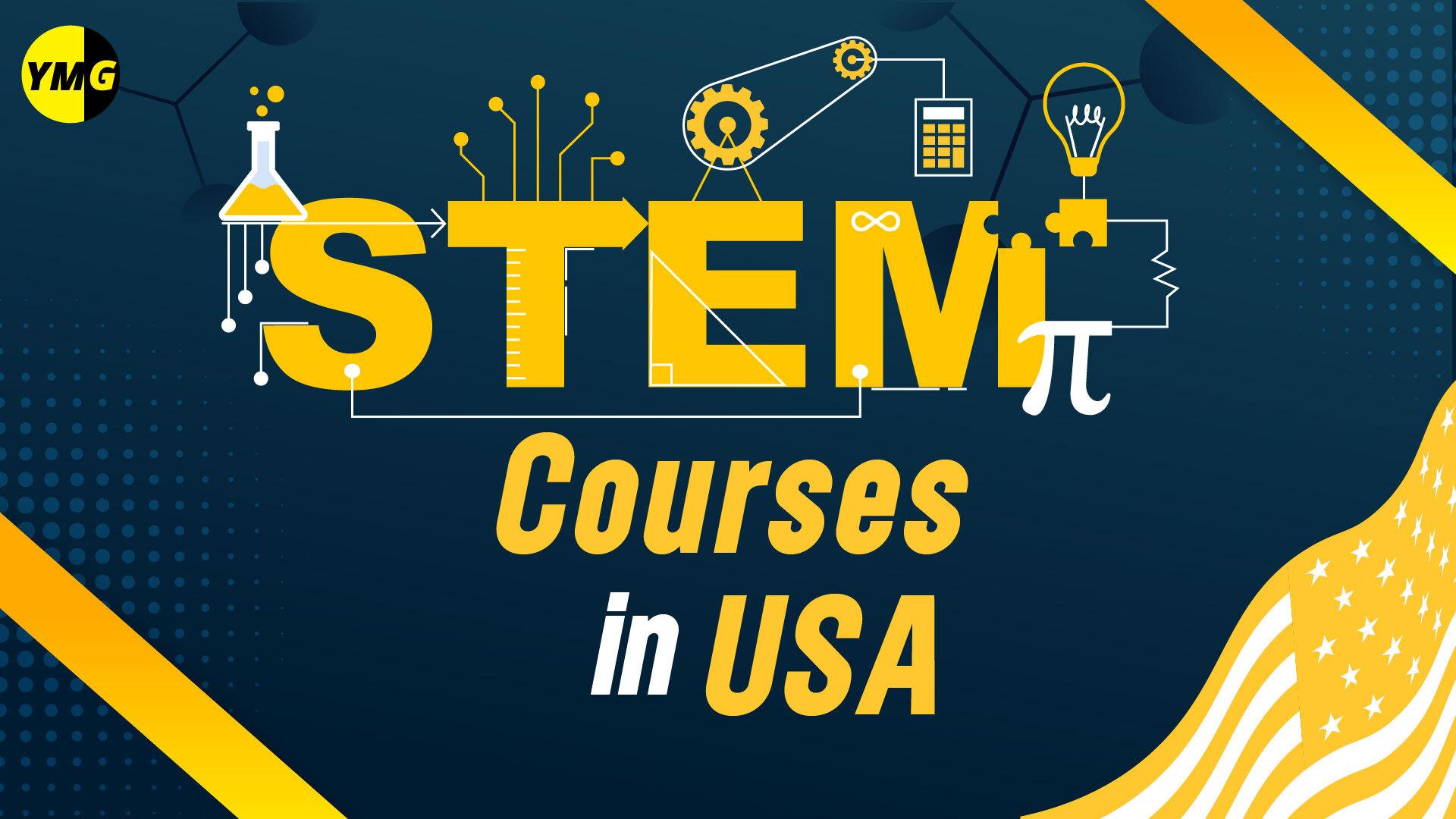
In this ever-evolving era of technological advancements and scientific breakthroughs, the significance of Science, Technology, Engineering, and Mathematics (STEM) education cannot be overstated. The United States, known for its world-class academic institutions, continues to be at the forefront of innovation, pushing the boundaries of human knowledge and shaping the future.
STEM fields play a pivotal role in addressing the complex challenges of our time, from developing sustainable energy solutions to unraveling the mysteries of the universe. As we embark on this journey to explore the opportunities and possibilities that lie ahead, we invite you to join us in discovering the captivating world of STEM education in the US.
In this blog, we will not only delve into what STEM is but also uncover why pursuing an academic degree in the US is an exceptional choice. We will explore the eligibility and admission criteria and the various types of STEM courses offered by US universities.
a) World-Class Reputation
b) Diverse and Collaborative Community
c) Extensive Research Opportunities
d) Career Prospects and Networking
- Types of STEM Courses US Universities offer
A) Bachelor's Degree
B) Master's Degree
- US Universities offering STEM Courses
- Documents required to pursue a STEM course in the USA
STEM (Science, Technology, Engineering, and Mathematics) is an interdisciplinary approach to education that integrates these four fields to foster critical thinking, problem-solving, and innovation. STEM has become increasingly important in today's rapidly advancing world, providing the foundation for technological advancements, scientific discoveries, and addressing complex global challenges.
Science:
In science, which includes biology, chemistry, physics, and environmental science, scientists develop experiments and theory to enhance our comprehension of the natural world.
Technology:
Technology refers to the application of scientific knowledge for practical purposes. Technological advancements have revolutionized communications, healthcare, transportation, and entertainment industries.
Engineering:
Engineering involves the application of scientific and mathematical principles to design and create solutions to real-world problems. Engineers develop new technologies, structures, and systems that improve our quality of life.
Mathematics:
Mathematics is the foundational language and toolset for analyzing patterns, relationships, and quantities, playing a vital role across all STEM fields and providing the framework for problem-solving in data analysis, cryptography, computer science, and finance.
STEM professionals are essential in driving innovation and progress in various industries. They are at the forefront of developing sustainable energy solutions, designing advanced medical devices, improving transportation systems, creating smart cities, and exploring outer space. STEM education equips individuals with critical skills like problem-solving, analytical thinking, collaboration, and creativity, which are highly sought after in today's job market.
1. World-Class Education:
The United States is renowned for its exceptional education system, particularly in STEM fields. American universities offer state-of-the-art facilities, cutting-edge research opportunities, and renowned faculty experts in their respective fields. Studying in the US provides access to a wealth of resources, fostering a dynamic learning environment.
2. Diverse and Collaborative Community:
STEM programs in the US attract students from around the globe, creating a diverse and multicultural environment. Collaborating with individuals from different backgrounds enhances creativity, critical thinking, and problem-solving skills. This exposure to diverse perspectives prepares students to thrive in a globalized workforce.
3. Extensive Research Opportunities:
US universities strongly emphasize research and innovation. Pursuing a STEM course in the US opens doors to various research opportunities, allowing students to work on groundbreaking projects alongside renowned researchers. This hands-on experience enhances theoretical knowledge and equips students with practical skills highly sought after by employers.
4. Career Prospects and Networking:
The US job market offers abundant opportunities for STEM graduates. The demand for skilled professionals in STEM fields is continuously growing, and the US provides a vast range of career options across industries. Additionally, studying in the US provides access to an extensive network of alumni, industry professionals, and potential employers, boosting career prospects.
Eligibility Criteria
Understanding and meeting these eligibility criteria is the first step towards successfully applying to STEM programs in the USA. Applicants should carefully review the specific requirements of each program and tailor their applications accordingly.
1. High School Diploma or Equivalent (Bachelor's);
Relevant Bachelor's Degree (Master's)
2. Math and Science Background
3. SAT/ACT Scores (Bachelor's)
4. English Language Proficiency
5. Letters of Recommendation
6. Statement of Purpose
7. Standardized Test Scores (Masters)
8. Research Experience and Publications (if applicable)
9. Transcript Evaluations (University dependent)
.jpg)
Types of STEM Courses US Universities Offer
US universities offer a wide range of STEM courses at bachelor's and master's levels. These programs allow students to specialize in various disciplines in Science, Technology, Engineering, and Mathematics. Let's explore some of the popular STEM courses offered by US universities:
A) Bachelor's Programs:
1. Computer Science:
This program studies computer systems, programming languages, algorithms, and software development. Students gain a strong foundation in coding, data structures, and computer architecture, preparing them for software development, cybersecurity, artificial intelligence, and more careers.
2. Biomedical Engineering:
Biomedical engineering combines engineering, biology, and medicine principles to develop innovative healthcare solutions. Students in this program learn to design and create medical devices, prosthetics, and imaging systems. They also study topics such as tissue engineering, biomaterials, and biomechanics.
3. Applied Mathematics:
Applied mathematics programs equip students with the skills to analyze and solve real-world problems using mathematical models and techniques. This field finds applications in finance, data analysis, cryptography, and optimization. Students develop strong analytical and problem-solving skills essential for various industries.
4. Environmental Science:
Environmental science programs focus on studying the impact of human activity on the environment and finding sustainable solutions. Students learn about climate change, conservation, pollution control, and natural resource management. Careers in environmental science include environmental consulting, protection, and renewable energy.
B) Master's Programs:
1. Data Science:
As data becomes increasingly important in various industries, data science programs train students to analyze and interpret large datasets to extract meaningful insights. Students gain expertise in statistical analysis, machine learning, data visualization, and predictive modeling. This program prepares students for roles such as data scientists, data analysts, and business intelligence professionals.
2. Electrical Engineering:
Electrical engineering master's programs delve into advanced topics like electronics, power systems, control systems, and telecommunications. Students gain hands-on experience in designing and analyzing complex electrical systems. Graduates can pursue telecommunications, renewable energy, robotics, and automation careers.
3. Chemical Engineering:
Chemical engineering programs at the master's level focus on chemical processes, material synthesis, and product development. Students learn to design and optimize chemical processes while considering safety and environmental factors. This program opens doors to pharmaceuticals, energy, environmental engineering, and manufacturing careers.
4. Bioinformatics:
Bioinformatics combines biology, computer science, and statistics to analyze biological data and develop computational tools for biological research. Students gain expertise in genomics, proteomics, and data analysis techniques. Graduates can work in the pharmaceutical industry, research institutions, and healthcare organizations.
These are just a few examples of the STEM courses available at US universities. Each program offers unique opportunities for students to specialize in their areas of interest and contribute to advancing their respective fields. Whether you choose a bachelor's or master's program, pursuing STEM education in the US can pave the way for a rewarding and impactful career.
US Universities offering STEM Courses
US universities are renowned for their excellence in providing STEM education, offering a wide range of programs that empower students to explore their passions and excel in their chosen fields. These institutions combine academic rigor with state-of-the-art facilities, cutting-edge research opportunities, and renowned faculty to create an environment conducive to learning and innovation.
Regarding STEM courses, several US universities stand out as leaders in the field. Here is a list of the top 10 US universities offering STEM courses at both the bachelor's and master's levels:
 Massachusetts Institute of Technology (MIT)
MIT, a global leader in STEM education, offers an unparalleled spectrum of programs spanning Aerospace Engineering, Physics, Electrical, Biological Engineering, and beyond. International students benefit from a transformative learning environment, fostering innovation and collaboration. Pursuing STEM at MIT opens doors to groundbreaking research and prepares students for impactful contributions to their respective fields.
 Stanford University
Renowned globally, Stanford University stands among the elite institutions, boasting a STEM Outreach division. Beyond academic excellence, Stanford's outreach extends globally, offering international students academic programs and groundbreaking research opportunities. Elevate your STEM journey at Stanford, where innovation meets world-class education.
 California Institute of Technology (Caltech)
Caltech, a beacon of academic brilliance, stands tall in STEM education. With a distinct approach to science and engineering, Caltech offers international students unparalleled opportunities in research and academia. The university's commitment to pushing boundaries makes it an ideal destination for those seeking a transformative STEM experience.
Learn more (Undergraduate)
Learn more (Graduate)
 Harvard University
Harvard University, a global academic powerhouse, extends its influence in STEM education through the Academic Resource Center. The center serves students worldwide and ensures a robust foundation in science, technology, engineering, and mathematics. Harvard's commitment to excellence makes it a prime choice for aspiring STEM enthusiasts.
 University of California, Berkeley
UC Berkeley's School of Information (I School) is a beacon for STEM education, offering diverse information management and technology programs. Renowned for its innovative curriculum and cutting-edge research, the I School provides an ideal environment for students worldwide to thrive in STEM disciplines.
 Carnegie Mellon University
Carnegie Mellon University, a global leader in STEM education, boasts a multidisciplinary approach to Science, Technology, Engineering, and Mathematics. With world-class faculty and cutting-edge research, Carnegie Mellon's commitment to excellence attracts international students seeking unparalleled opportunities in the ever-evolving landscape of STEM disciplines.
 University of Michigan, Dearborn
At the University of Michigan, Dearborn, STEM-designated F1 students not only delve into robust STEM programs but also benefit from Optional Practical Training (OPT). This unique feature empowers international students to apply their theoretical knowledge in real-world settings, enhancing their skill set and employability upon graduation.
 Cornell University
At Cornell University, students in STEM fields experience a comprehensive education that goes beyond the conventional classroom setting. Engaging in cutting-edge research and benefitting from state-of-the-art facilities, international students find a stimulating environment for academic growth. Cornell's commitment to fostering global perspectives makes it an ideal choice for aspiring STEM professionals.
Learn more (Undergraduate)
Learn more (Graduate)
 University of California, Los Angeles (UCLA)
UCLA is a hub of opportunity for STEM enthusiasts worldwide. With a diverse range of programs, including Computer Science, Bioengineering, and Environmental Science, UCLA caters to the academic aspirations of international students. The university's emphasis on research and innovation provides a dynamic platform for fostering future leaders in STEM fields.
 University of Illinois, Urbana-Champaign
The University of Illinois, Urbana-Champaign, offers a cutting-edge Master of Science in Financial Engineering, a distinguished STEM-designated program. A comprehensive curriculum blending finance and technology equips students, including international aspirants, with the skills needed for success in the ever-evolving financial landscape.
For Bachelor's Degree:
1. High School Transcripts
2. Standardized Test Scores (SAT/ACT)
3. Letters of Recommendation
4. Personal Statement or Essay
5. English Language Proficiency Test Scores (TOEFL/IELTS)
For Master's Degree:
1. Bachelor's Degree Transcripts
2. Graduate Record Examination (GRE) Scores
3. Letters of Recommendation
4. Statement of Purpose
5. Resume or Curriculum Vitae (CV)
6. English Language Proficiency Test Scores (TOEFL/IELTS/Duolingo/PTE)
7. Professional Experience (if applicable)
8. Portfolio (for specific programs)
Ensure to check specific university requirements for precise documentation.
The prospects are transformative as we delve into STEM courses in the USA for 2024. The dynamic landscape of Science, Technology, Engineering, and Mathematics opens doors to limitless possibilities, shaping problem solvers, innovators, and leaders. Choosing a STEM path is not just an academic pursuit; it's a commitment to pioneering change. The diverse offerings from top-tier universities amplify the experience, ensuring that each student contributes uniquely to the tapestry of STEM excellence. STEM professionals will continue to be at the forefront of progress as the world evolves. Armed with knowledge, skills, and a global perspective from premier institutions, those venturing into STEM courses today are the architects of tomorrow's advancements. The future is STEM— where innovation meets impact and knowledge transforms into real-world solutions.