















Study in Canada || Everything about the complete application process





WOW! where do I even start with this one?
We usually visualize unparalleled urban cities and photogenic nature-panorama when we think of Canada. But is that all that this country fondles? No, the world applauds that Canada is a melting pot of ethnic diversity, the perfect place for immigrants to assimilate and blend into society.
Canada has metamorphosized into seventh heaven for higher education studies, sought by numerous prospective international students. Outside your lecture hall, you can get carried away by the magnetism of Aurora Borealis in Northern territories, attend the largest firework competition in the world, Celebration of Lights in Vancouver, or encounter a Grizzly Bear in Western Canada.
One of the best countries for Quality of Life, Canada has entrenched its place among the world's prominent study destinations. If you have been willing to immigrate to Canada and add colors to your academic life, you halted your quest at the right place! You can graciously combine a rewarding university life with diverse and absorbing recreational activities here. So, what are we waiting for? Let us do the preliminary work of planning an academic journey in the Great White North.
1. Selecting the course
Canada has always locked its place among the world's 10 superior study-abroad destinations. The industrial coursework encourages international students to pursue internships and jobs during their graduation or post-graduation studies. If you are immigrating with the intent of studying, the choice of program is one of the crucial factors of your student visa application. However, you need to present a convincing reason for studying the particular program in Canada. If you have a clear picture in mind of your future professional goals, you should emphasize programs that can expedite the journey to attain your targets.
Once you have rostered the courses of your interest, you should start checking out the general curriculum and other requisites for admission to that particular program. Eventually, you will get a good idea of what is offered in the coursework. Although the country provides a plethora of courses, let us look at some of the best programs!

2. Deciding the Graduate School
With the profusion of Bachelor's, Master's, and Professional Degree courses offered by the educational institutions, prominent academic benchmarks lie at the nexus of Canada. Moreover, a majority of programs delivered by Canadian schools concentrate on research and render the opportunities to students to be involved in enthralling experiments and projects.
The educational institutions in Canada present above and beyond academic excellence. It stands out in all the parameters, be it teaching, imparting knowledge, or international perspective. However, if the duration of your intended study program exceeds six months, you will require a study permit, which is exclusively valid for colleges deemed as Designated Learning Institutions (DLIs) by the Canadian authorities.
A DLI is an endorsed academic institution that can welcome international students from the respective Canadian province. Therefore, while planning to pursue your secondary education in Canada, you should ascertain that the desired institution is listed under DLIs. Now, let us map the top Canadian universities!
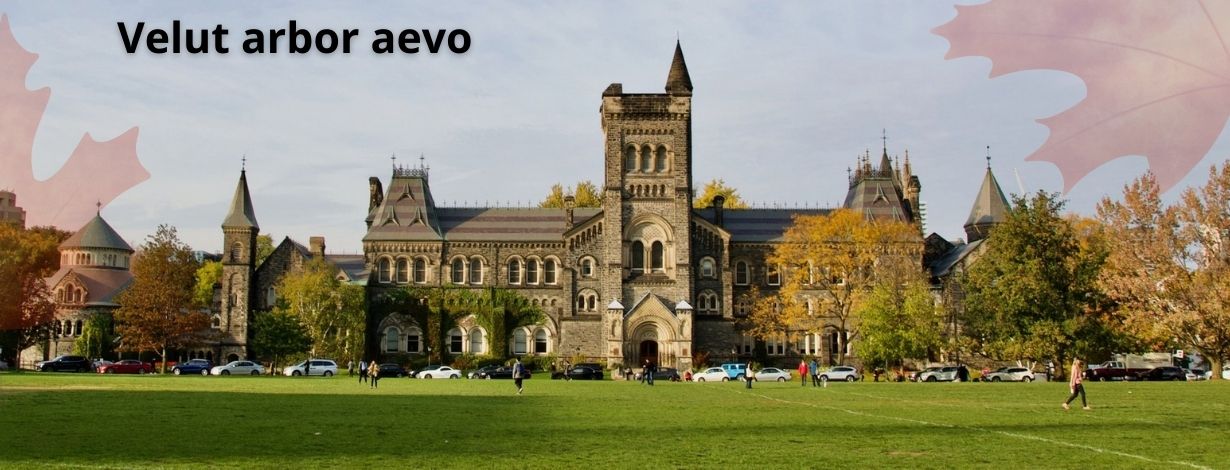
UNIVERSITY OF TORONTO
UNIVERSITY OF BRITISH COLUMBIA
MCGILL UNIVERSITY
MCMASTER UNIVERSITY
UNIVERSITY OF MONTREAL
UNIVERSITY OF ALBERTA
UNIVERSITY OF CALGARY
UNIVERSITY OF OTTAWA
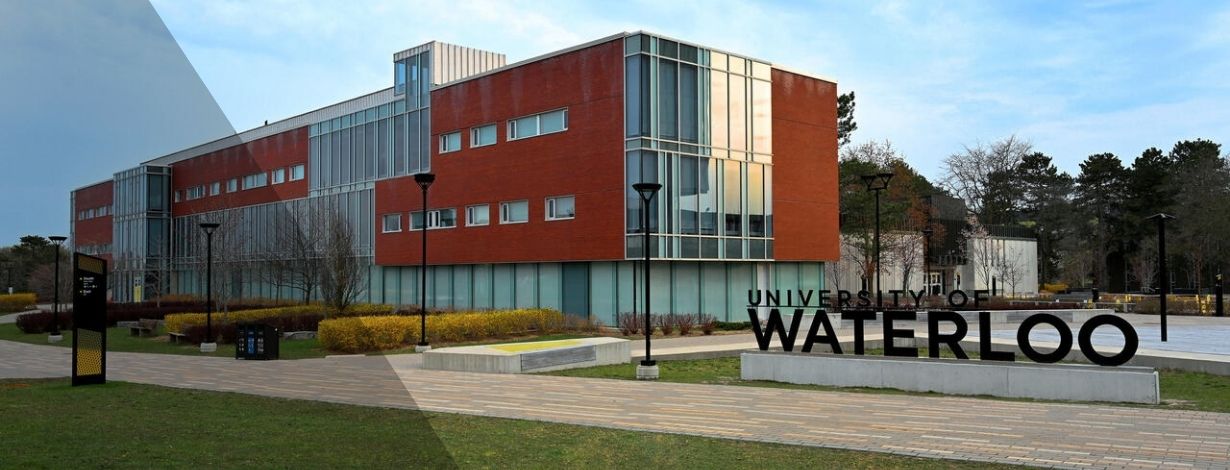
UNIVERSITY OF WATERLOO
Addled with multiple admits in hand? YMGrad can lend you a hand to finalize the university with detailed reports!
3. Pre-application task
I know once you have shortlisted the institutions, you would have been envisioning yourself studying on the university campus. However, there is plenty of groundwork that needs to be done before your studies.
PS: Do not forget to check whether your institution is listed as Designated Learning Institution or not, in order to avoid falling into the traps of any education scams.
Post enlisting the universities, the next step should be to make a note of the university admission deadlines, document requirements, application process, and application fee payment. In addition to this, do not forget to hunt the scholarship provided by the universities.

Most colleges and universities offer internal scholarships to their students. The details of the same can be checked on the university portal itself. Do not forget that if the scholarship information is not available on the website, you can check out the university mail address and can directly write a mail to them asking about the scholarship programs available for international students.
Of all the things, a candidate's eligibility for a scholarship is assessed based on outstanding previous academic performance and language proficiency scores. Apart from internal scholarships, there exist financial scholarships, also known as bursaries, offered to the students who can demonstrate the requirement of financial assistance.
4. University Application Process
So far, you would have checked the deadlines and other essential pre-application steps for the universities. Now comes the task of commencing the application process for all the shortlisted universities. Depending upon the institution, document requirements might vary. It is advisable to check the university portal for specific admission demands and connect with the relevant university members for any dilemmas.
Canada does not have a unified application portal. Instead, the application and admission are handled by the individual university itself. Being a bilingual nation, where French and English are the official languages, you might be required to submit the proficiency results of both English and French.
The generally accepted English proficiency tests scores are:
- IELTS Academic
- TOEFL iBT
- PTE Academic
The following are the French tests commonly accepted by top Canadian universities:
- DELF
- DALF
- TCF
- TEF
One of the crucial steps for international applicants is to submit a complete application along with all necessary documents for the timely processing of the application.
Consider the following pointers before starting an application:
- On the college website, ensure that the program intake is still open.
- Recheck the deadlines and program start date.
- Consider the admission requirements and verify your profile suitability.
- Start preparing the documents. Get your documents translated and prepare copies of other academic documents and the passport.
When talking about the University Application Process, how can we forget about the documents required for admission? Here is the list of documents required:

Academic Certificates

Completed Application Form

Resume/ CV

Affidavit of Financial Support

Bank Statement

2 - 3 Letter of Recommendations

Official Score report

Statement of Purpose

Passport Size Photographs

Experience Letter (if applicable)

Additional Certificates (Extracurricular Activities)
Planning to apply to more universities, but the application fee is an impediment? Sign up YMGrad's Member Universities with no application fees!
5. Accommodation
One of the most nerve-racking parts of the immigration process is figuring out the accommodation. Students have the option to choose from on-campus and off-campus options.
The on-campus residences are in close proximity to the classes and libraries. At the same time, if you opt for off-campus, then you need to utilize public transport, private vehicle, or self mode of transportation to visit school. However, the best thing in Canada is that the academic institutions provide great accommodation assistance to students.

The following are the accommodation types for international students in Canada:
1. On-campus Accommodation - Dormitories & Townhouses
The Canadian educational institutions provide residence on-campus or nearby the institution campus, generally known as dormitories or residencies. Dormitories are a sort of larger building that can accommodate numerous students, while townhouses can usually lodge 4-6 students.
Moreover, whether it is dormitories or townhouses, they usually include a canteen or food court. Additionally, on-campus housing can be economical if they provide the facility of purchasing a meal plan. The on-campus residencies allow the students to reside with their peers, extend networks, and make new connections.
2. Off-campus Accommodation - Condominium or Shared Appartments
Off-campus housing options provide students with a single room in a housing space with other roommates. Urban cities, including Toronto, Vancouver, and British Columbia, offer a wide range of rentable apartments. On the other hand, the cost of housing is comparatively cheaper in less congested cities.
The shared apartments usually have a single-occupancy room and common kitchen, dining room, bathroom, and living room area.
3. Homestay
Another option available for international students is homestay - living with a host family, which offers a private, single-occupancy room, and serves meals as decided during the agreement. Also, most of the homestays provide the students with internet access.
However, some of the families might provide you with an option of shared accommodation and the choice to not opt for the meals. The only drawback of homestays is that students might have to travel comparatively more to reach the university campus.
4. Rental Apartments
The other housing option available is unfurnished or furnished apartment rentals. There are several websites that might help you look for temporary-furnished rental apartments even before you land in Canada.
Apart from this, the unfurnished apartments are also in the queue, but being a new immigrant, it is certainly challenging to manage in an unfurnished flat.
Be it furnished or unfurnished rentals, do not forget to check out the reviews of these apartments and the feedback from the previous tenants.
6. Student Cities in Canada
Life as an overseas student surpasses assignments, exams, and university. It is diving into the pool of the indigenous culture and exploring the new country. Therefore, let us take a look at the top student-friendly cities in Canada!

Montreal
A well-developed public transportation system, rich culture, and a safe environment for international students lie at the crux of this city. This second-largest Canadian city, also considered the biggest city in Quebec, sees a significant inflow of overseas students every year.
Toronto
The largest Canadian city and the provincial capital of Ontario, Toronto, is renowned for securing its place in one of the most multicultural cities globally. It attracts a greater number of students than any other city in Canada. Toronto presents international students with great employment opportunities. The best thing about this city is no language barrier and a well-structured network of subways and buses to make your travel more affordable.
Vancouver
The city of spectacular natural beauty offers incredible locations, from mountains and lush green forests to magnificent lakes and oceans. If you are a vegan, then Vancouver is the perfect location for you.
Quebec
Quebec, the capital city of the French province with which it shares its name, is known for its low unemployment rate, excellent economic lifestyle, and world-class education. While cheap education and lower housing rent are the pros, the city demands proficiency in French. A majority of the population, as well as students in Quebec, are French-speaking.
Ottawa
The historic sites and landmarks, coupled with its arts and culture, lie at the heart of the city. It is considered one of the most liveable and safest cities in Canada. The home to some prominent universities, Ottawa offers great employment possibilities.
7. Post-Graduate Work Permit
The post-graduate work permit is offered by Canadian Universities to the graduates who have completed a course of study with a minimum of eight-months duration. Applicants may get a PGWP that would be valid for the same length as their study program. For example, a student with a course duration of 10 months might get a PGWP of up to 10 months.

A PGWP is a generic path for students to get permanent residence (PR) in Canada, which is comparatively difficult in most countries. However, students are eligible for PGWP only if they graduate from a Designated Learning Institution and aspire to stay in Canada to work temporarily.
Nevertheless, graduating from a DLI does not imply that you are automatically eligible for a PGWP. There are certain institutions that can offer you PGWP, which can be checked on the Government of Canada's website.
Winding up,
The university application process can be an arduous task. However, if you plan out everything strategically, the procedure turns out to be no sweat. In this blog, I attempted to unglue the complete application process, from choosing courses and accommodation to the PGWP prospects. Thanks a ton for sticking around till the end! Wish you luck with your application acceptance at your dream university!
Received the admission? All set to commence the VISA filing? Let YMGrad take over the entire VISA application duties!