















Guide To O-1 Visa: Everything You Need To Know





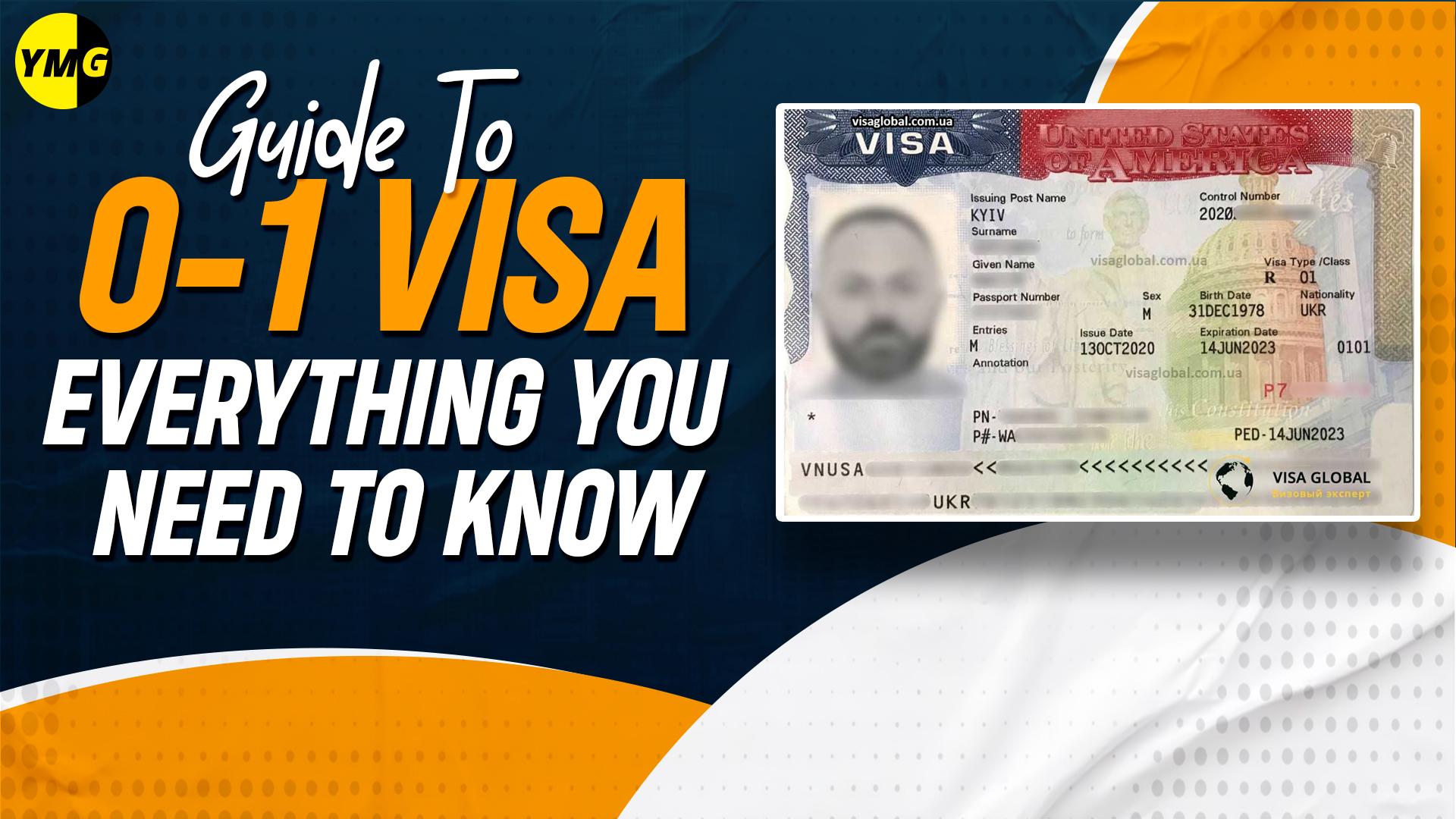
Have you ever wondered how movie superstars, sportspersons excelling in their fields, or any top-notch professionals easily move to the United States? While trying to get a permit to live in the US may seem like a mountain to scale for ordinary people, these exceptional actors, athletes, and professionals seem to make it to the States without any hassle.
Well, this opportunity is just at arm's length: meet the O-1 visa, a special non-immigrant visa for individuals with extraordinary abilities in the fields of science, business, art, education, athletics, and even the entertainment industry.
The O-1 visa is a game-changer for those who have proven their exceptional skills and achievements. Unlike the H-1B visa, there is no lottery system for the O-1 visa, and it offers unlimited extensions. This will give you the flexibility to continue your work without any worries. Plus, with the O-1 visa, you can work for multiple employers or even be self-employed.
In this blog, we'll look into the process of acquiring an O-1 visa, whether you are eligible for it, or how you can qualify for an O-1 visa.
What is an O-1 Visa?
The O-1 visa allows you to live and work in the United States in your area of exceptional talent or skill. Unlike other visas, there is no limit on the number of times you can extend an O-1 visa, so you may be able to stay in the US for a long period as long as you continue to qualify.
Your spouse and children can also accompany you. To qualify for an O-1 visa, you must demonstrate that you have extraordinary abilities and that you are coming to the US to work in your specialized field. The O-1 visa petition must be filed by a US employer or an agent on your behalf. You cannot file the petition on your own; the US company or agent acts as the petitioner, and you are the beneficiary.
Benefits of O-1 Visa
Here is why the O-1 visa can be advantageous:
- Unlimited Extension: One of the key benefits of the O-1 visa is its flexibility in terms of extensions. Initially, your O-1 visa can grant you legal status in the US for up to 3 years. After that, you can extend your visa in one-year increments, with no limit on the number of extensions. This means that some individuals have been able to remain in the US for 15 years or more under the O-1 visa, provided they continue to meet the requirements.
- Work Flexibility: With an O-1 visa, you can work for multiple employers or even run your own business at the same time. This gives you a lot of freedom to pursue different opportunities simultaneously, whether it's working with different companies or taking on multiple projects within your field of expertise.
- No Lottery System: Unlike some visas that use a lottery system to decide who gets one, the O-1 visa doesn’t have this restriction. You can apply at any time, and there’s no annual cap or lottery involved.
- Premium Processing: The O-1 visa is eligible for premium processing, which allows you to speed up the review of your application. While the standard fee is $510, for an additional fee of $2,805, the USCIS will process your O-1 petition within 15 days or less, giving you a quicker response.
Cons of O-1 Visa
- There is no simple "transfer" of your visa from one employer to another. Each employer must independently apply for an O-1 visa for you, and the approval of the old visa does not carry over to a new employer.
- Spouses of O-1 visa, that is the dependent O-3 visa holders are not permitted to work in the United States.
Sub-Categories of O-1 Visa
The O-1 visa comes in two types, each pertaining to different fields:
O-1A: This visa is for people with extraordinary abilities in business, science, education, or athletics. Examples of those who might qualify include top entrepreneurs, highly respected professors, leading researchers, computer scientists, CEOs, medical specialists, and data scientists.
O-1B: This visa is for individuals with extraordinary talent in the arts or significant achievements in the TV, film, or motion picture industry. People who might qualify include award-winning directors, famous actors, innovative chefs, influential fashion designers, celebrated dancers and choreographers, and well-known visual artists.
O-1 Visa Requirements
The O-1 visa is designed to recognize and celebrate individuals who have reached the pinnacle of their professions across various fields. However, the path to proving "extraordinary ability" varies depending on your expertise. Here's a breakdown of the key requirements you need to meet to qualify for this prestigious visa:
1. Demonstrating Extraordinary Ability
To qualify for the O-1 visa, you must first establish that you possess extraordinary ability in your field. The standard you need to meet differs depending on your area of expertise:
O-1A visa requirements: For Science, Business, Athletics, and Education
You must demonstrate that you are among the top few who have achieved excellence in your field. This can be done through a One-Time Achievement (like a major international award) or by meeting at least three of the following evidentiary criteria:
- Documentation of the beneficiary’s receipt of nationally or internationally recognized prizes or awards for excellence in the field of endeavor.
- Documentation of the beneficiary’s membership in associations in the field for which classification is sought, which require outstanding achievements of their members, as judged by recognized national or international experts in their disciplines or fields.
- Published material in professional or major trade publications or major media about the beneficiary relating to the beneficiary's work in the field for which classification is sought. This evidence must include the title, date, and author of such published material and any necessary translation.
- Evidence of the beneficiary's participation on a panel, or individually, as a judge of the work of others in the same or in an allied field of specialization for which classification is sought.
- Evidence of the beneficiary's original scientific, scholarly, or business-related contributions of major significance in the field.aking original contributions of major significance.
- Evidence of the beneficiary's authorship of scholarly articles in the field, in professional journals, or other major media.
- Evidence that the beneficiary has been employed in a critical or essential capacity for organizations and establishments that have a distinguished reputation.
- Evidence that the beneficiary has either commanded a high salary or will command a high salary or other remuneration for services as evidenced by contracts or other reliable evidence.
- Evidence that the beneficiary has either commanded a high salary or will command a high salary or other remuneration for services as evidenced by contracts or other reliable evidence.
O-1 B Visa visa requirement: For Arts
You must prove that you have achieved "distinction" in your field, meaning a high level of skill and recognition that sets you apart as a leader. This can be shown through nomination or receipt of significant awards or by meeting at least three of the following criteria:
- Evidence that the beneficiary has performed, and will perform, services as a lead or starring participant in productions or events that have a distinguished reputation as evidenced by critical reviews, advertisements, publicity releases, publications, contracts, or endorsements.
- Evidence that the beneficiary has achieved national or international recognition for achievements is evidenced by critical reviews or other published materials by or about the beneficiary in major newspapers, trade journals, magazines, or other publications.
- Evidence that the beneficiary has performed, and will perform, in the lead, starring, or critical role for organizations and establishments that have a distinguished reputation evidenced by articles in newspapers, trade journals, publications, or testimonials.
- Evidence that the beneficiary has a record of major commercial or critically acclaimed successes as evidenced by such indicators as title, rating, standing in the field, box office receipts, motion pictures or television ratings, and other occupational achievements reported in trade journals, major newspapers, or other publications.
- Evidence that the beneficiary has received significant recognition for achievements from organizations, critics, government agencies, or other recognized experts in the field in which the beneficiary is engaged. Such testimonials must be in a form that clearly indicates the author's authority, expertise, and knowledge of the beneficiary's achievements.
- Evidence that the beneficiary has either commanded a high salary or will command a high salary or other substantial remuneration for services in relation to others in the field, as evidenced by contracts or other reliable evidence.
2. Sustaining National or International Acclaim
Your extraordinary ability must be sustained over time. This means that your acclaim in your field must be continuous and well-documented. Evidence submitted to prove your extraordinary ability often overlaps with this requirement, but additional documentation may be needed to show the longevity of your recognition.
3. Working in Your Field of Extraordinary Ability
To secure an O-1 visa, your employment in the United States must align with your field of extraordinary ability. It's crucial to clearly define your area of expertise and demonstrate that your intended work in the U.S. is directly related to this field.
4. Qualifying Employment in the U.S.
Your work in the U.S. must qualify as an “event” under the O-1 visa guidelines. This could include a specific project, a series of engagements, or ongoing work that showcases your extraordinary ability.
5. U.S. Sponsorship for Your Visa
The O-1 visa application must be filed by a U.S. employer, agent, or a foreign employer through a U.S. agent. This entity will petition on your behalf, highlighting your qualifications and the necessity of your role in the U.S. If you do not have an entity, then you can create your own entity to sponsor yourself.
6. Advisory Opinion from a Peer Group
Finally, you must obtain an advisory opinion from a peer group, labor organization, or management organization in your field. This opinion serves as an endorsement of your extraordinary ability and your role within your field. Suppose your employer or agent can demonstrate that an appropriate peer group, including a labor organization, does not exist. In that case, a decision can be made based on the evidence they submit in support of the Form I-129.
Looking to apply for an O-1 visa?
Connect with us on WhatsApp to get started with your journey.
How To Apply For an O-1 Visa
Here’s a straightforward guide to applying for an O-1 Visa:
Step 1: Build Your Profile
Besides attaining national recognition or merit, publishing research papers and having your works cited will help you easily check off at least three criteria required for an O-1 visa.
If you are looking for ways to look for research paper but are unsure of how to begin, you can take our Research Paper Service to get complete assistance with research papers.
You can join a research group where multiple contributors work together on a project. This can reduce the workload and provide diverse insights, though it may dilute individual contributions. In this pathway, you will receive assistance until your paper is published. This includes help with citations and ensuring your work is credible and meets the required standards.
If you prefer working alone, you can undertake a research project independently. This requires more effort but gives you full credit for the work. If you are looking for ways to publish a research paper completely from scratch on your own, you can join our Discussion Groups and look for peers who might be interested in working with you.
Step 2: Hire an Immigration Lawyer
As the O-1 visa process can get quite complicated, it is crucial for you to have an experienced immigration lawyer whom you can rely on. They will conduct a detailed consultation, explain each step, and provide a list of the documents needed for your application.
Step 3: Secure an Employer or Sponsor
The first step in applying for the O-1 visa is to find an employer or sponsor who is willing to support your petition. Without a sponsor, the petition cannot proceed. But do not be disheartened if you do not have a sponsor. You can choose to start a company of your own and use it to sponsor you.
Step 4: Gather Documentation
Collect all necessary documents identified by your lawyer. This includes awards, publications, and other evidence that proves your extraordinary ability.
Step 5: File Form I-129 and O Supplement
Form I-129, the Petition for a Nonimmigrant Worker, is essential for qualifying for an O-1 visa. A U.S. employer, agent, or a U.S. agent acting on behalf of a foreign employer must file Form I-129. This should be done at least 45 days before the job start date, but no earlier than six months before the intended start date.
Your lawyer will file this form along with the O-supplement and all supporting documents, such as your evidence of extraordinary ability and CV. Once Form I-129 is approved, you can move forward with your O-1 visa application.
Step 6: Apply for the O-1 Visa
If you're not changing your status, you'll need to apply for your O-1 visa at the U.S. Consulate in your home country. After your I-129 is approved, your lawyer can help you schedule an interview at the Consulate and prepare the necessary documents.
Documents Required for O-1 Visa
You will need the following documents to apply for an O-1 visa:
- Your Resume or CV: A detailed account of your professional background, education, and achievements.
- Passport Copy: Include copies of your passport for yourself and any accompanying family members.
- Evidence of Extraordinary Ability or Achievement: Documents that demonstrate your extraordinary ability or significant achievements, such as awards, publications, or other notable accomplishments.
- Letters of Recommendation and Endorsement: Letters from experts or professionals in your field endorsing your qualifications and achievements.
- Advisory Opinion: An opinion from a peer group, labor organization, or management organization relevant to your field, supporting your extraordinary ability.
- Employment Contract: A contract between you and your U.S. employer or agent or a detailed breakdown of the terms of your employment.
- Explanation of Work in the U.S.: A detailed explanation of the specific work you will be doing in the United States, including the nature of the activities, start and end dates, and an itinerary if applicable.
Conclusion
The O-1 visa presents a unique opportunity for individuals with extraordinary abilities to live and work in the United States, offering flexibility, longevity, and the chance to pursue multiple professional endeavors. However, navigating the application process requires careful preparation and thorough documentation to demonstrate your exceptional talent.
By working closely with an experienced immigration lawyer, gathering the necessary evidence, and following the steps outlined, you can maximize your chances of a successful O-1 visa application. With the right approach, the O-1 visa can be your gateway to a thriving career in the U.S., allowing you to contribute your expertise and continue excelling in your field.
Frequently Asked Questions!

No, you cannot apply without a sponsor or an employer. However, you can set up your own company and choose to sponsor yourself.

The O1 visa offers holders the ability to apply for a Green Card because it is a dual intent visa.
The 90-day rule states that temporary visa holders who marry or apply for a green card within 90 days of arriving in the United States are automatically presumed to have misrepresented their original intentions.
There is no simple "transfer" of your O-1 visa from one employer to another. Each employer must independently apply for an O-1 visa for you, and the approval of the old visa does not carry over to a new employer.
An O-1 visa holder may work for more than one employer, but each employer must file a separate O-1 visa petition.
You can initially stay in the US for a period of 3 years. After which, your visa can be renewed for unlimited number of times every year.
The con of an O-1 visa is that spouses are not allowed to work.
The USCIS approves around 80 to 95 percent of O-1 visa applicants each year, but approval rates can vary depending on which service center processes the application.
No, spouses of O-1 visas are not eligible to work in the US.
For a premium processing fee, you must pay an additional amount of $2,805 to the standard $510 fee.
Suppose your employer or agent can demonstrate that an appropriate peer group, including a labor organization, does not exist. In that case, a decision can be made based on the evidence they submit in support of the Form I-129.