















214(b) visa denial: What does it mean and how to overcome it?






Did you recently appear for the US VISA interview, but it turned out futile? The officer handed you a 214(b) slip and told you that you do not qualify for the visa under section 214(b). Or did you also get worried about 214(b) rejection while going through various visa interview experiences? Let this blog guide you through the intricacies of 214(b), which is a section that presents the clauses for denial or refusal of a US visa.
The nonimmigrant visa applicants, except the L-1 and H-1B aspirants, are required to showcase that they are not intending to immigrate as per the US laws. Nonimmigrant visitor visa applicants, i.e., B1, B2, and B1/B2 applicants, must exhibit that they are not planning to abandon their homeland and will be visiting the US for pleasure or business purposes.
However, the F1 or student visa applicants carry additional baggage of proving that they meet the requirements to pursue the particular course along with showcasing their intention to return to their native country. While in the case of Employment visa applicants, they must convey the qualification and direct relevance for the visa they are applying for. Applicants who have overstayed the previous visa duration or are under the suspicion of unlawful employment, be it 15 years ago, have been invoked on 214(b).
All about Section 214(b)
Under section 214(b) of the Immigration and Nationality Act, a visa application can be denied by the judgment of the visa officer. Generally, applications of the candidates who fail to showcase financial stability and the intent of returning to their hometown are denied under this section. Moreover, if you do not provide the legit reasons to secure the US visa, then the visa officer is entitled to deny your request.
The Immigration and Nationality Act's Section 214 keeps a check on the admission of nonimmigrants to the United States. Also, Subsection (b) of 214 states that:
"Every alien shall be presumed to be an immigrant until he establishes to the satisfaction of the consular officer, at the time of application for a visa, and the immigration officers, at the time of application for admission, that he is entitled to a nonimmigrant status."
According to 214(b), all applicants applying for a nonimmigrant visa are assumed to be immigrants; that is, they are willing to move to the US permanently. Hence, every visa aspirant, irrespective of the visa class, must prove their intention of not immigrating to the US in order to persuade the visa officer that they do not have the immigrant intent. Failure to exhibit that you do not have immigration intentions will lead to visa refusal under Section 214(b). Therefore, you must clarify during the interview that currently, you do not have any plans to remain in the US permanently.
Misconception about 214(b)
There are certain misconceptions about Section 214(b), out of which the most prevalent is that one can increase the visa approval chances if they bring more documents to the visa interview location. Although documents are one of the crucial aspects, they do not constitute to be the only decisive factor for visa decisions.
Is a 214(b) denial permanent?
No, the consular visa officers generally give a fair chance for reapplicants to apply and present additional or some new persuasive evidence of hometies and show what has been changed since the past visa rejection. However, some applications will not get a nonimmigrant visa regardless of multiple reapplication attempts until their circumstances, including the personal, financial, and professional aspects, change considerably.
Note: If the consular visa officer informs you that you do not qualify for the visa, then it is recommended not to reapply unless you make some significant changes or modifications to your profile. If you fail to present the improvements in your profile, you might risk refusing again.
What are the primary reasons for visa rejection under 214(b)?
When a nonimmigrant visa application is rejected under 214(b), the consular officer hands over a standard rejection letter to the applicant that states the reason for denial. The particular letter usually states a lack of strong home ties or the inability to meet the standards for visa issuance as denial reasons. However, the actual reason for denial might vary greatly; sometimes, it may not even seem legitimate or valid.
Over the years of experience, we have gathered insights into various reasons that lead to visa denial under 214(b). Here is a compilation of predominant reasons why the visa officers deny an application under Section 214(b).
1. Inefficiency to show stronger home ties: Anything that shows that your roots are connected to your country of residence, including your employment, family or social relationships, and possessions, are considered as 'TIES.' Strong ties vary from individual to individual and country to country. Some instances that might be constituted as ties can be a stable job or business, property, family, or/and numerous other personal property.
Applicants who recently received an employment opportunity or are unemployed or have a low-paying job; are unmarried; have no children; own no assets or property, and live in rural areas, might appear to possess limited ties to their country of residence. In this case, there will be considerably higher chances that the consular officer can give you a 214(b) slip.
However, the ties are not limited to just the aforementioned instances. Visa officers are well aware of the diversity and understand that everyone's situation is different. During the visa interview, each profile is assessed without any reservations while keeping into consideration the social, cultural, professional, and factors. Suppose the applicant is young, maybe a student, and fails to form significant ties in the country. In that case, their profile is assessed, taking into light their intentions, long-term plans, family situations, and prospects in their residential country.
2. Previous visa overstay: There are numerous instances that align under this subhead. The most frequent reasons for the denial are:
- If you have had multiple trips to the US for prolonged periods of time and you have also exceeded the legit stay over there, then this might create suspicion in front of the consular officer that you have the intention to immigrate there or you are involved in some illegal employment activities.
- If your profile constitutes one of those who have overstayed their visa, applied for visa extensions, or illegally migrated to the US, then your visa could be denied under 214(b).
- If the application matches a profile that has shown trends of overstaying, the visa application is less likely to receive approval. Moreover, if you belong to a country where the officials have witnessed increasing patterns of not returning to their country of residence, then your visa is highly expected to receive a denial.
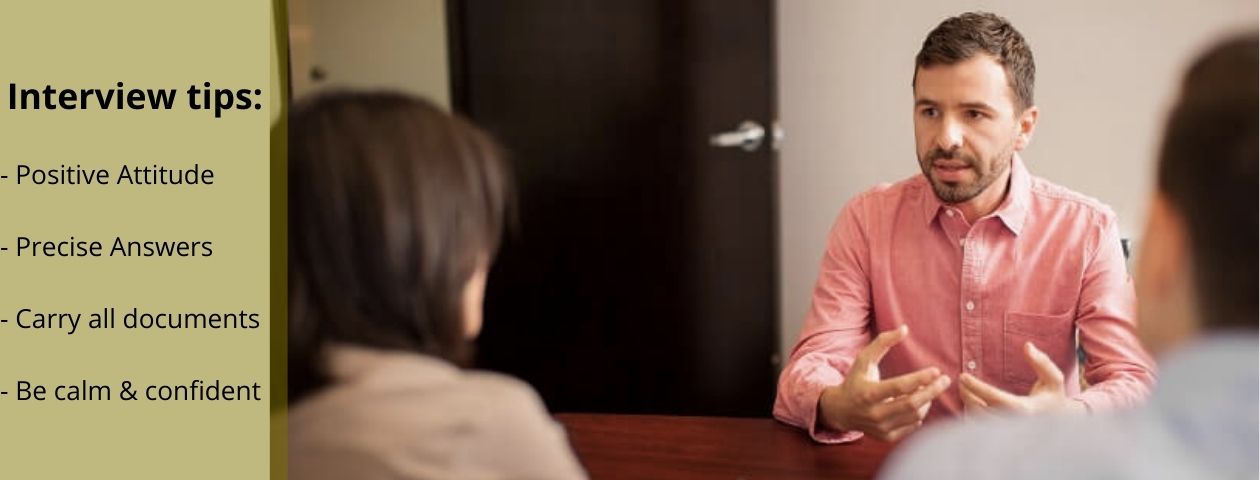
3. Performance during the interview: One of the most crucial aspects that predominate the visa decision is how you conduct yourself. Other factors include how honestly you respond to the officer's questions, your dress sense, your facial expressions & reactions, confidence level while answering, discrepancies in the answers & the information mentioned in your DS160 or the application form. All these aspects weigh your credibility, intentions, and eligibility for the visa.
4. Failure to meet visa criteria: There are certain visa requirements for temporary employment that an applicant must meet. Failing to do so might lead to a denial. Also, in the case of a nonimmigrant study visa, applicants must be aware of the distinction between F, M, and J visa types. Suppose someone is going for a short-term research program under the F-1 category. In that case, the consular officer might state that they are not eligible to apply under this visa class, thus providing them with a rejection. Therefore, you must consider researching the suitable visa type before proceeding with the application process.
All you need to prepare for the US Visa Interview is a one-on-one mock interview session with YMGrad's interview experts.
5. Student-centric issues: There are numerous reasons that may lead to a student visa rejection. Some common basis for denial are:
- Lack of sufficient economic ties to the country of residence.
- Planned admission to a 'non-brand name' university or community college.
- Enrollment in the course of study with little to no practicality in the home nation.
- Admission to a program with no relevance to prior education (e.g., a writer enrolled in a business analytics program).
- A considerable poor grade-track record in the US on the initial F-1 visa.
- Applications of students over the age of 35.
6. Modifications in visa status in the US: In spite of United States Citizenship and Immigration Services (USCIS) approval of a change of visa status, an individual returning to their home country to get a new visa after changing the visa status is often denied a visa. The visa officers might suspect that the applicant's true intent during the initial application was to change the visa status.
7. Previously emigrated other relatives: If someone has relatives in the US, then there are chances that their visa might be denied because, "If there are close relatives staying in the US, they may help the applicant in settling down in the US, thus presenting a negative impact." Additionally, the officers might ask what was the relative's visa status when they landed in the States. For example, if an applicant on an F-1 visa falls in love with and plans to marry a US citizen, it can lead to a visa denial for the parents as well to attend the wedding.
8. Suspicion of fraudulent activities: If the documents submitted by the applicant seem fake or fraudulent, the consular officer might have a strong suspicion and will deny the application under Section 214(b). Therefore, it is recommended not to present any fake documents, including employment references, bank statements, or experience certificates.
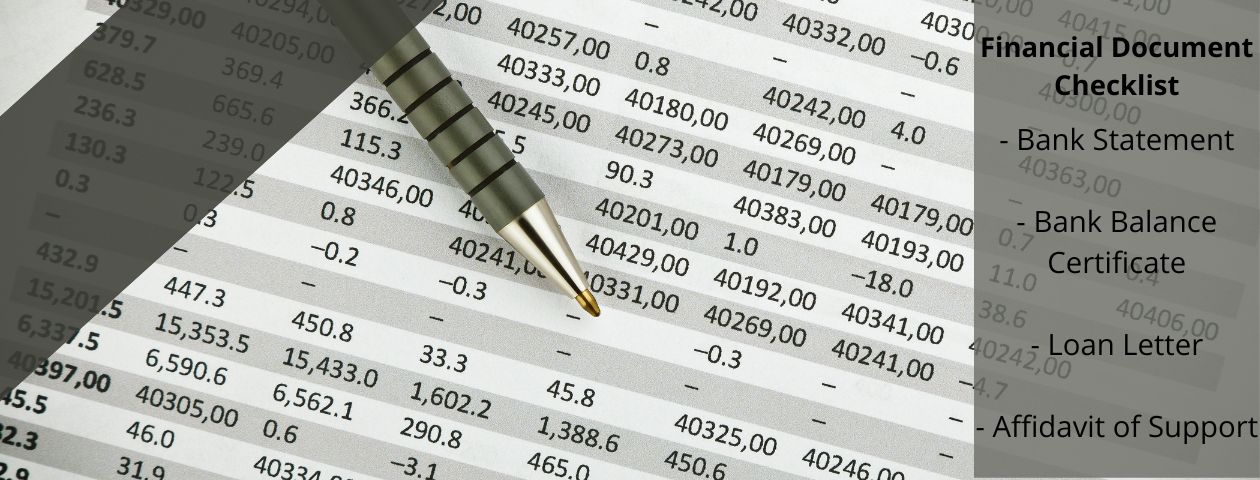
9. Insufficient funds: Irrespective of the visa class, an applicant should show a sufficient amount of funds to finance their trip to the US. Suppose, if a candidate is applying for the F-1 visa, then they must showcase the requisite funds. If they are being sponsored by a non-relative entity, then they must present an affidavit of support in order to refrain from getting a rejection under 214(b). Another case we can consider to understand the context better could be an applicant going for some medical treatment. If the intent of travel is to seek medical treatment, the candidate should present enough funds to finance their bills, be it personally or through a sponsor. In this case, if the applicant opens a new bank account a couple of days before submitting their visa application and deposits the funds, then this may raise suspicion that the funds are secured through illegal ways.
10. Lack of change in circumstances since the previous rejection: Consular officers often carry over the previous rejection, citing an inefficiency in the change of circumstances. Undoubtedly, there might be additional personal or political deliberations. This can happen even if a candidate is re-applying within days of the actual approval, providing new evidence. One of the most common questions for previously refused applicants is 'What has changed since your last application?'. There is a common myth among applicants that if they change the purpose of travel, there will be higher chances of visa approval. For instance, if an applicant was earlier visiting the US to attend a wedding but now they have decided to enroll in an ESL course. In such a case, they are making the situation worst for themselves by exhibiting desperation that might spotlight their ability to get a visa for the coming years.
How to overcome a 214(b) denial?
If a visa has been denied earlier under 214(b), applicants must convince the Officer that their circumstances, including family, social, economic, and other ties with their home ties, will compel them to return to their home country upon expiration of the visa. While reapplying, if a candidate can further present convincing evidence to support their case, the officials will reconsider their case and revoke the previous visa denial. It is recommended that you should prepare for the visa interview process with experts to anticipate the questions that might come up, keeping in view the new information you are presenting for your profile. The verbal answers that an applicant provides during the interview with the visa officer will weigh high on the decision. Hence, it is suggested to consult visa experts before reapplying after a 214(b) refusal.
Did the visa officer hand you a 214(b) slip during the last interview? We can assist you to ace the interview; check out the Visa Application Help service.
Check out this video to for tips & tricks to overcome a 214(b) visa rejection